The Water Heater Decision: Tankless Water Heater vs. Traditional Water Heater
Upgrading your home’s water heating infrastructure is one of the most critical mechanical investments you can make as a homeowner. Water heating accounts for approximately 18% of a typical home’s energy budget, making it the second-largest utility expense behind space heating and cooling. When your legacy unit approaches the end of its functional service life, you face a central decision: should you replace it with a standard storage tank model or upgrade to a modern, high-efficiency on-demand system?
Navigating a tankless water heater vs. traditional system comparison requires evaluating several key factors, including upfront equipment and installation expenses, long-term energy efficiency, daily hot water consumption patterns, and physical space availability.
By understanding the mechanical operation, life cycle costs, and performance trade-offs of both options, you can select the ideal hot water system tailored precisely to your household’s needs.
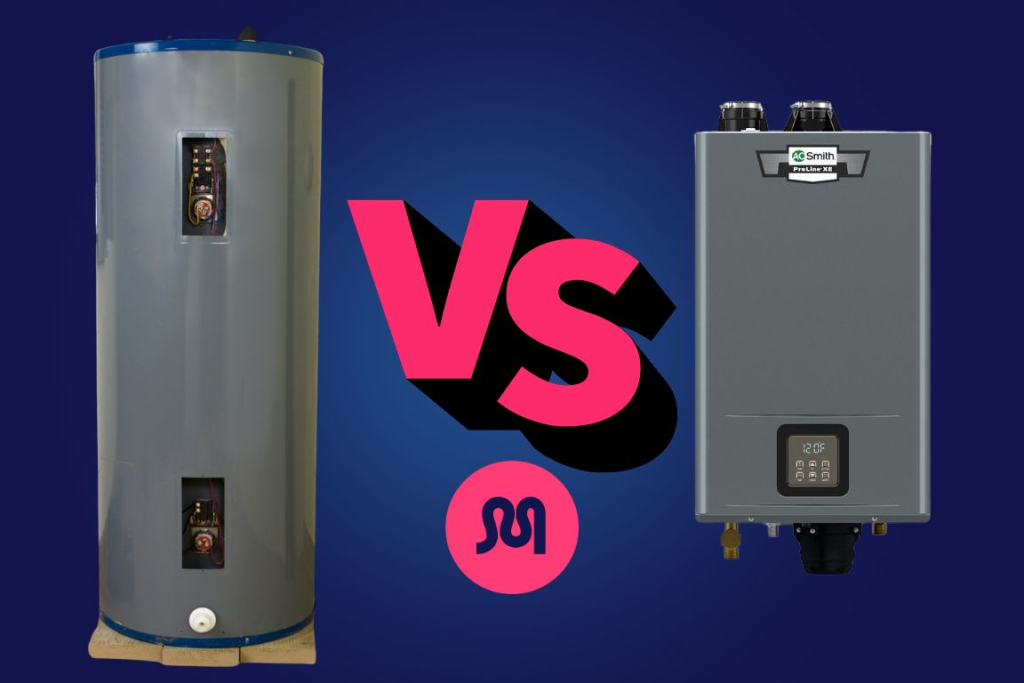
Understanding Mechanical Differences & Performance Profiles
To choose between a tankless water heater vs. traditional storage unit, it helps to understand how each technology generates, stores, and delivers hot water throughout your plumbing fixtures.
Traditional Storage Tank Water Heaters
Traditional water heaters utilize an insulated steel tank—typically ranging in capacity from 30 to 80 gallons—to maintain a continuous reservoir of heated water. Fuel sources (natural gas, propane, or electricity) continuously heat the water to a set thermostat temperature, usually between 120°F and 140°F.
When you open a hot water tap, heated water flows from the top of the tank through your home’s supply lines, while cold water enters the bottom of the tank to be heated.
- The Primary Advantage: Low initial capital cost and straightforward, standardized replacement procedures.
- The Primary Drawback: Standby energy loss. The system continuously consumes energy to keep stored water hot 24 hours a day, even when no one is home. Once the hot water in the tank is exhausted, the system requires a recovery period—often 30 to 60 minutes—to reheat a full new tank.
Tankless (On-Demand) Water Heaters
Instead of maintaining a massive reservoir of standing hot water, a tankless water heater operates strictly on demand. When a hot water faucet or appliance is activated, cold water flows into the unit, triggering a flow sensor that ignites a high-powered gas burner or activates electric heating elements. The water circulates through a heavy-duty heat exchanger, heating instantly to your desired temperature as it flows through the unit.
- The Primary Advantage: Endless, continuous hot water production without standby energy loss, packed into a sleek, space-saving cabinet.
- The Primary Drawback: Higher initial installation expense and potential flow-rate limitations if multiple high-demand fixtures (such as two showers and a dishwasher) run simultaneously.
For unbiased data on residential appliance efficiency ratings and energy conservation metrics, consult the comprehensive guides provided by the U.S. Department of Energy (Energy.gov).
Head-to-Head Comparison: Tankless vs. Traditional Systems
Selecting the right water heating technology comes down to balancing immediate installation constraints with long-term operational savings. Below is a detailed breakdown of how these systems compare across essential criteria.
| Performance Metric | Tankless Water Heater | Traditional Tank Water Heater |
| Energy Efficiency (UEF) | High (Up to 0.95 UEF) | Moderate (0.60–0.70 UEF) |
| Hot Water Capacity | Continuous (Gallons Per Minute based) | Limited by Tank Volume (30–80 Gallons) |
| Equipment Lifespan | 20+ Years | 10–12 Years |
| Upfront Installed Cost | Higher Initial Investment | Lower Initial Investment |
| Physical Footprint | Compact, Wall-Mounted Cabinet | Large, Floor-Standing Cylinder |
| Maintenance Requirements | Annual Descaling & Flushing | Annual Anode Rod & Sediment Flush |

Detailed Analysis of Key Decision Factors
1. Energy Efficiency and Monthly Utility Savings
Evaluating a tankless water heater vs. traditional unit reveals significant differences in operational efficiency. Tankless systems operate up to 24% to 34% more efficiently than standard storage units in homes that use 41 gallons or less of hot water daily.
Because on-demand units eliminate standby thermal loss entirely, fuel consumption drops noticeably. Over the 20-year operational life of a tankless system, energy savings often offset the higher upfront equipment cost.
2. Hot Water Demand and Flow Rate (GPM)
Understanding your household’s simultaneous hot water demand is crucial when selecting a system:
- Storage Tanks deliver high initial flow rates because the hot water is already sitting in the reservoir. However, if your family uses up the 50-gallon capacity during morning showers, the water runs cold until the tank reheats.
- Tankless Systems provide a continuous stream of hot water that never runs out. However, they are rated by Gallons Per Minute (GPM) rather than total volume. If your home requires 7 GPM simultaneously (e.g., running two rain showers and a washing machine at once), an undersized tankless unit may experience a slight drop in water pressure or temperature unless properly sized by a professional installer.
3. Equipment Lifespan and Long-Term Value
Most traditional tank-style water heaters come with manufacturer warranties ranging from 6 to 10 years and have an average mechanical lifespan of 10 to 12 years. Over time, mineral sediment builds up at the bottom of the steel tank, causing thermal stress, corrosion, and eventual tank rupture.
By contrast, tankless units feature replaceable internal components and brass/copper heat exchangers. With routine annual maintenance, a high-quality tankless unit easily lasts 20 years or longer, effectively doubling the service lifespan of a standard tank.
4. Space Constraints and Structural Footprint
Traditional water heaters take up a significant amount of floor space, requiring a footprint of roughly 9 to 16 square feet in a basement, utility closet, or garage.
Tankless systems are small, wall-mounted units about the size of a standard carry-on suitcase. Mounting a tankless unit on an interior or exterior wall frees up valuable floor space in small utility areas or tight mechanical rooms.
Essential Installation Considerations for New Hampshire Homes
Upgrading from a traditional tank to an on-demand tankless system requires specific mechanical retrofits. It is not always a simple “plug-and-play” swap:
- Gas Supply Line Sizing: Gas-fired tankless units require a high BTU heat output (often 120,000 to 199,000 BTUs) to heat cold incoming groundwater instantly. This usually requires upgrading your gas supply pipe from a standard 1/2-inch line to a 3/4-inch line.
- Specialized Venting Systems: High-efficiency condensing tankless units produce acidic condensate and low-temperature exhaust gases. They require sealed, dedicated PVC, CPVC, or polypropylene venting routed through an exterior sidewall.
- Electrical Panel Capacity: Electric tankless units demand very high electrical amperage (often requiring 100 to 150 amps dedicated solely to the heater). Homes with 100-amp main panels typically require an electrical service upgrade prior to installing an electric tankless unit.
- Water Hardness Protection: New Hampshire groundwater often contains dissolved minerals like calcium and magnesium. Hard water can cause scale buildup inside a tankless unit’s narrow heat exchanger channels. Installing a whole-home water softener or an inline descaling filter protects your system and preserves its warranty.
To ensure your system is accurately sized and safely installed according to local plumbing codes, explore professional installation options for a tankless water heater vs. traditional system from certified local plumbing specialists.